When it comes to a roof replacement, most homeowners think first about shingles, tiles, or metal panels, but the roof underlayment is just as critical. Think of it as the hidden armor beneath your roof’s surface. It’s the layer that protects your home from leaks, wind driven rain, and Florida’s relentless humidity long before the first shingle is ever installed.
In Florida’s challenging climate, choosing the right roof underlayment can make the difference between a roof that lasts decades and one that fails prematurely. In this guide, we’ll walk you through the key differences between peel and stick and synthetic underlayments, explain how each protects your home, and help you decide which one is best for your next roof replacement.
A roof underlayment is a waterproof or water resistant barrier installed directly on top of your roof decking and beneath your roof covering. Its main job is to protect your home from water intrusion caused by heavy rain, wind damage, or a broken shingle or tile.
Underlayments are especially important in Florida, where roofs face intense sun, high humidity, and hurricane force winds. This protective layer helps:
Prevent water from seeping into the roof structure
Protect wood decking from rot and mold
Add strength and wind resistance to your roofing system
Provide an additional safeguard if outer roofing materials are damaged during storms
During a roof replacement, choosing the correct underlayment is one of the most crucial (and often underestimated) decisions you’ll make.
Peel and stick underlayment, sometimes called “self-adhering” or “ice and water shield” is a high performance material made from an SBS, modified asphalt base with a fiberglass mat. It adheres directly to the roof decking, forming a continuous waterproof seal.
Unlike traditional felt or synthetic underlayments, no nails or staples are required. Once it’s pressed onto the surface, it bonds tightly, sealing every edge and nail hole.
Creates a secondary water barrier
Because it fully adheres to the decking, it prevents water from getting underneath. If wind driven rain ever lifts your shingles, the underlayment still keeps water out.
Qualifies for insurance discounts
Many Florida insurers recognize peel and stick as a secondary water barrier, which can lower your home insurance premium after a roof replacement.
Seals around fasteners
As shingles or tiles are nailed into place, the underlayment material self seals around each nail, preventing leaks.
Withstands high winds and heavy rain
In hurricane prone areas, this can make the difference between a dry attic and costly storm damage.
Low maintenance and long lasting
Once applied, it remains stable even under Florida’s extreme heat and UV exposure.
The main drawback is cost. Peel and stick is typically more expensive than synthetic underlayment, and installation takes longer since the material must be carefully applied to avoid air pockets. However, for homeowners seeking the highest level of roof protection, it’s worth every penny.
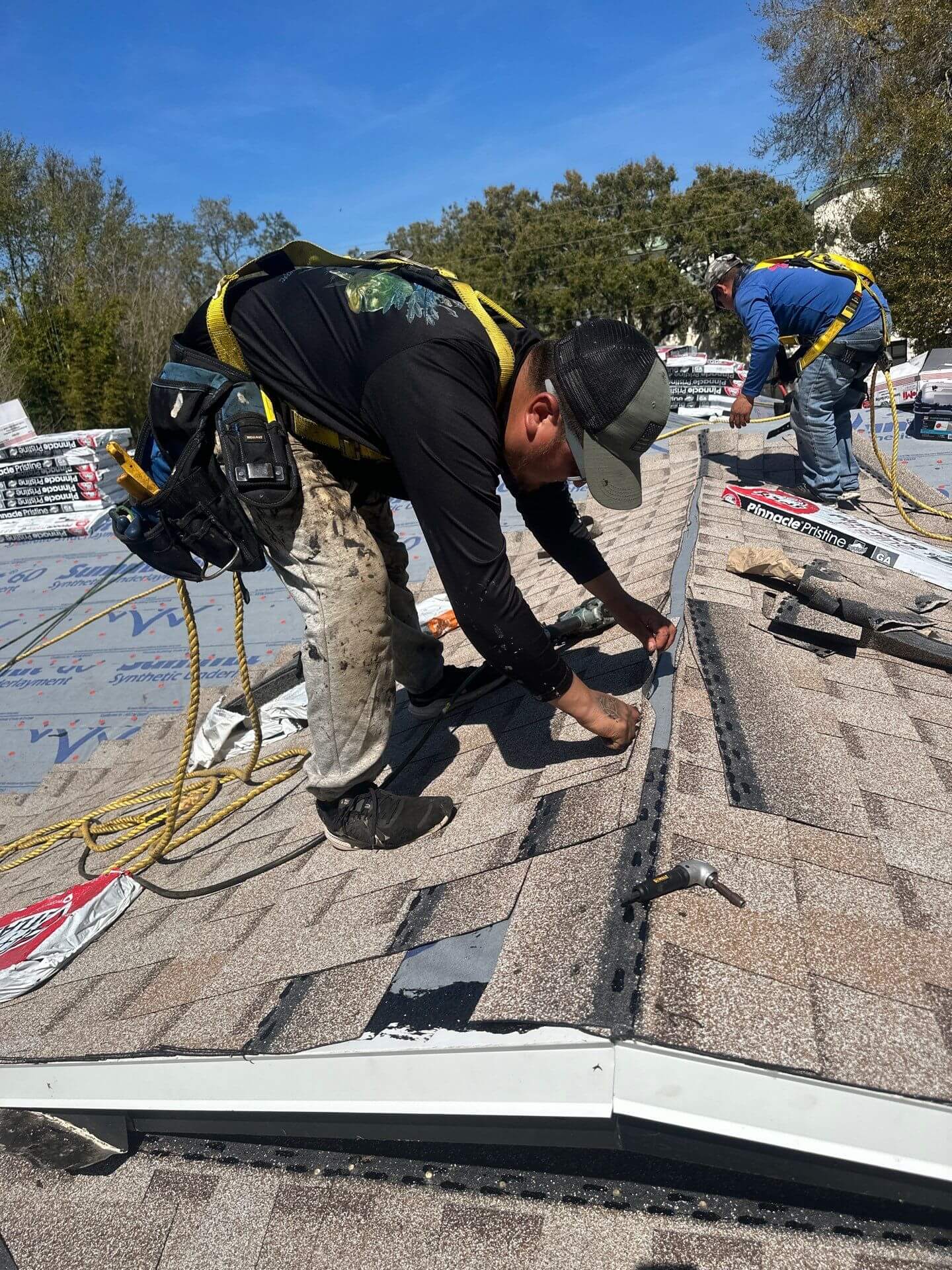
Synthetic underlayments are the modern standard for most roof replacement projects. Made from woven polypropylene or polyethylene, they are far superior to the old felt paper that used to dominate the roofing industry.
Whereas felt could tear easily, synthetic materials are incredibly strong and tear resistant, even when walked on or exposed to high winds.
They’re also lightweight and easier for roofers to handle on large jobs.
Superior strength and tear resistance
The woven design allows it to flex and stretch without ripping, even during installation in windy conditions.
UV and moisture resistance
Synthetic underlayments can remain exposed for weeks without degrading, unlike felt paper that breaks down quickly.
Better traction and safety
Roofers prefer synthetics because they provide more grip and stability underfoot, reducing the risk of slips during installation.
Code compliance and reliability
In Florida, building codes require two layers of synthetic underlayment for most roofing systems, providing strong base protection against heavy rainfall.
Cost-effective protection
For many homeowners, synthetic underlayment strikes the perfect balance between affordability and performance.
Unlike peel and stick, synthetic underlayments require nails or cap fasteners to secure them to the decking, sometimes up to 20,000 nails on a single home! While this adds time to installation, it’s still a durable and proven method that offers excellent value for Florida homeowners.
Choosing between peel and stick and synthetic underlayment depends on your budget, your insurance goals, and the level of protection you want.
| Feature | Peel & Stick | Synthetic |
|---|---|---|
| Waterproof Seal | ✅ Complete | ✅ Water resistant |
| Nails Required | ❌ None | ✅ Yes |
| Insurance Discount Potential | ✅ Yes | ❌ No |
| Wind Resistance | ✅ Excellent | ✅ Good |
| Cost | 💰 Higher | 💰 Lower |
| Best Use | High risk areas (eaves, valleys, penetrations) | General coverage |
At Pinnacle Roofing Group, we often use both materials together:
Peel and stick underlayment in critical areas (valleys, edges, and penetrations)
Synthetic underlayment across the rest of the roof deck
This hybrid approach gives homeowners the best mix of strength, value, and long term protection.
Florida’s climate is one of the toughest in the country for roofing systems. From summer heat that can exceed 100°F on your rooftop to hurricane winds that tear shingles loose, your roof’s underlayment is the unsung hero keeping your home dry.
A poor quality or improperly installed underlayment can lead to:
Hidden leaks and water damage
Mold growth in your attic
Premature roof failure
Costly repairs that insurance may not cover
Investing in the right roof underlayment during your roof replacement ensures that your new roof not only looks great but also performs for decades under Florida’s extreme weather conditions.
At Pinnacle Roofing Group, we help homeowners across Florida make smart, lasting roofing decisions. Whether you’re comparing roof underlayments, choosing new shingles, or scheduling a full roof replacement, our experienced team ensures your home gets the protection it deserves.
We offer:
Free roof inspections
Honest, transparent recommendations
Expert installation by licensed professionals
Options for roof repair, roof maintenance, and full replacements
Your roof is your home’s first line of defense, make sure it’s built with the right materials from the start.
At Pinnacle Roofing Group, we’ve helped thousands of homeowners navigate the same decision. Our team will walk you through the pros, cons, and pricing for your specific home so you can invest in a roof that makes sense today and for decades to come.