When Florida homeowners hear the term peel-and-stick underlayment, they often assume one thing:
“If it’s on the roof, insurance will count it.”
Unfortunately, that’s not always true, and this misunderstanding can cost homeowners thousands in lost insurance discounts, denied credits, or failed inspections.
If you’re planning a roof replacement in Florida, understanding how peel-and-stick underlayment actually works, and how insurance companies evaluate it, is critical.
Let’s clear up the confusion.
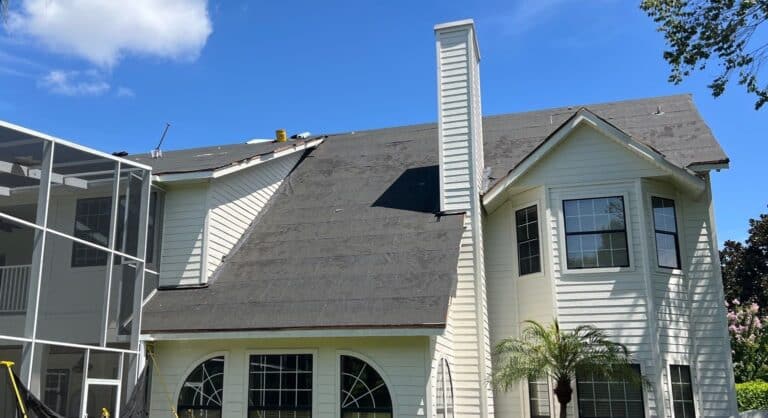
Peel and stick underlayment (also called self-adhering underlayment) is a waterproof membrane installed beneath roofing materials. Its job is to act as a secondary water barrier, protecting your home if shingles are damaged or blown off during a storm.
Unlike traditional felt and synthetic underlayment, peel-and-stick:
Bonds directly to the surface below
Seals around nails and fasteners
Helps prevent water intrusion during wind-driven rain
In Florida, this layer can make a major difference during hurricanes and tropical storms.
Here’s where most confusion starts.
From an insurance perspective, a secondary water barrier is not just a product — it’s a properly installed system.
For insurance credits to apply:
Peel and stick must be installed directly to the roof decking
It must be continuous or properly sealed at seams
It must meet Florida Building Code standards
If the peel and stick is installed over old felt, over battens, or only in certain areas, many insurers will not recognize it as a valid secondary water barrier.
That means no discount, even if the material itself is premium.
Peel and stick underlayment is designed to adhere to clean, solid decking. That adhesion is what creates the waterproof seal.
If it’s installed over:
Old felt
Synthetic underlayment
Dusty or compromised decking
…the bond is weakened or completely ineffective.
From a insurance standpoint, that means:
Water can still migrate beneath the membrane
Nail penetrations may not self-seal properly
The system doesn’t perform as intended during storms
Insurance inspectors know this, and they look for it.
After a roof replacement, many homeowners expect insurance discounts automatically. In reality, insurers rely on inspections and documentation.
During an inspection, they may check:
Permit records
Installation methods
Underlayment type and placement
Photos from the roofing contractor
If peel and stick was not installed directly to decking, inspectors may mark:
“Secondary water barrier not verified.”
That single note can eliminate a valuable discount.
That’s good practice — but not a full secondary water barrier.
Insurance usually won’t count it.
Unfortunately, insurance guidelines don’t care what was said — only what can be verified.
This is why choosing the right roofing contractor matters so much.
A replacement is often a once-in-20–30-year event. If peel and stick underlayment isn’t installed correctly the first time, there’s no easy fix without removing the roof again.
Getting it right means:
Better storm protection
Reduced risk of interior water damage
Potential insurance discounts
Stronger resale value
Getting it wrong means:
Missed insurance credits
Higher premiums
Limited protection during extreme weather
Here’s another important distinction:
Florida Building Code sets minimum installation requirements
Insurance companies apply their own standards for discounts
A roof can be code-compliant and still not qualify for certain insurance credits.
That’s why experienced Florida roofers install peel-and-stick:
With both code and insurance verification in mind
Using photo documentation
With clear permitting and inspection records
At Pinnacle Roofing Group, peel and stick underlayment isn’t treated as an upsell — it’s treated as a system.
Our process includes:
Removing old underlayment when required
Installing directly to clean decking
Sealing seams according to manufacturer specs
Documenting installation for insurance purposes
We don’t guess, we install with intent.
Before your replacement, ask:
Will peel and stick be installed directly to decking?
Will old underlayment be removed first?
Will installation be documented for insurance?
Does this qualify as a secondary water barrier?
A qualified roofing contractor should answer clearly, not vaguely.
Peel and stick underlayment is one of the best defenses your home can have against Florida storms. But it only works, and only counts for roof insurance, when it’s installed correctly.
If it’s not applied directly to decking, it may look good on paper but fail when it matters most.
When it comes to your roof, details matter.
And this is one detail you don’t want to get wrong.
Peel-and-stick underlayment is a self-adhering waterproof membrane installed under roofing materials. It acts as a secondary water barrier, helping protect your home during storms, leaks, or roof damage.
For peel-and-stick to function properly and qualify as a secondary water barrier for roof insurance, it must bond directly to the clean roof decking. Installing it over old felt, battens, or synthetic layers can weaken adhesion and void insurance recognition.
Usually not. Insurance companies require documentation showing proper installation. If the underlayment isn’t directly on decking, the secondary water barrier may not be recognized, potentially affecting discounts or coverage.
Peel-and-stick can be used on most roof replacements, but proper installation is critical. A qualified roofing contractor will remove old underlayment as needed and install it according to manufacturer specifications and Florida building codes.
Ask whether peel-and-stick will be applied directly to decking, if old underlayment will be removed, and whether the installation will be documented for roof insurance purposes. A professional roofing contractor will answer these clearly.
Yes. When installed correctly, peel-and-stick forms a continuous waterproof layer beneath your shingles, protecting your home from water intrusion during wind driven rain and storms.