Ultimate Homeowner's Checklist for Buying a New Roof: Your Guide to Quality and Peace of Mind

As a homeowner, replacing or installing a new roof is one of the most important investments you’ll make for your property. Not only does it protect your home from the elements, but it also boosts curb appeal, energy efficiency, and overall value. However, navigating the roof buying process can feel overwhelming with so many options, contractors, and details to consider. That’s where a comprehensive homeowner roof checklist comes in handy.

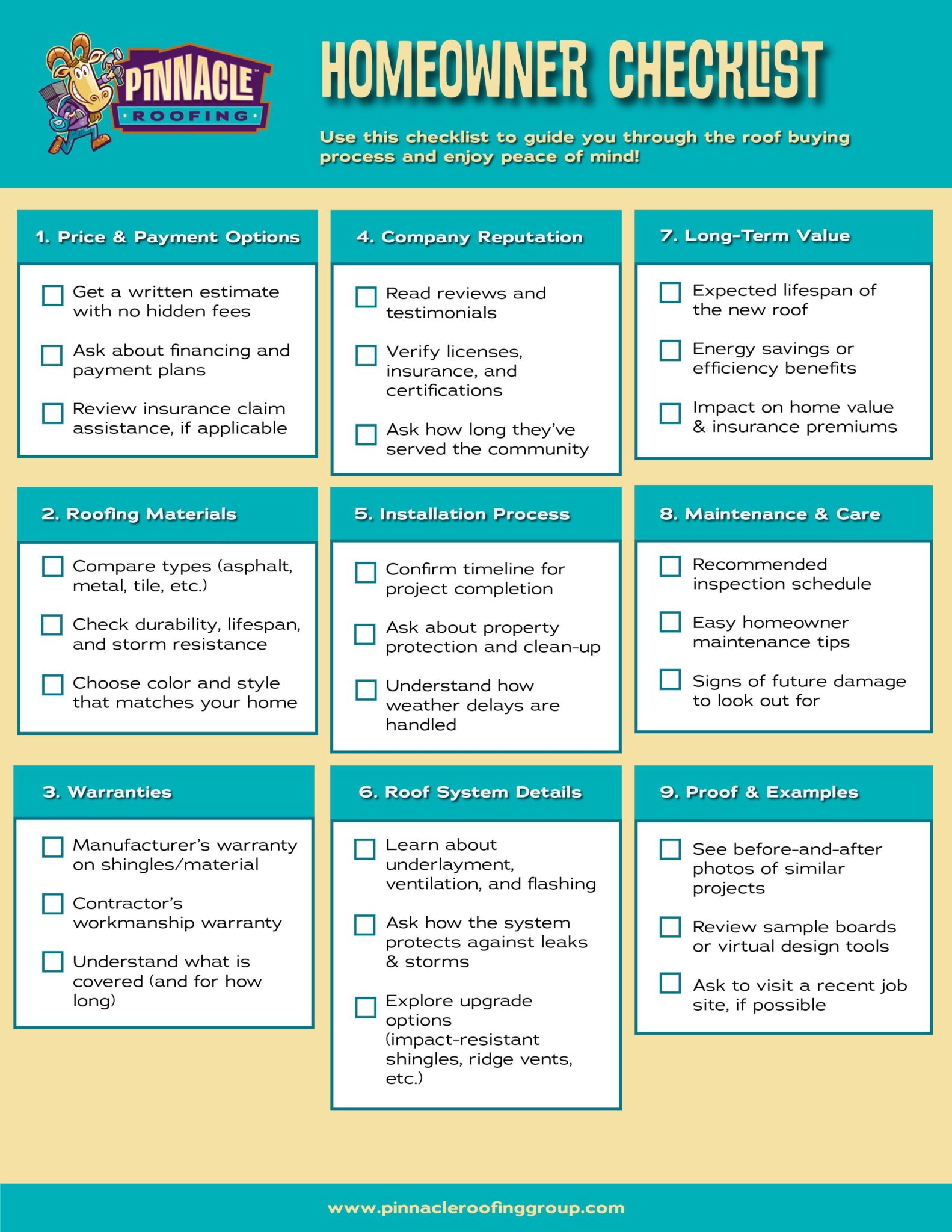
In this buying guide, we’ll break down the essential steps based on a trusted homeowner checklist from Pinnacle Roofing. Whether you’re dealing with storm damage, an aging roof, or simply upgrading, this roof replacement checklist will help you make informed decisions, avoid common pitfalls, and ensure long term satisfaction. Let’s dive into the key factors every homeowner should evaluate when buying a new roof in 2025.

Evaluate Price and Payment Options

The first step in any roof buying guide is understanding the costs involved. A transparent pricing structure is crucial to avoid surprises down the line.

  • Get a Written Estimate with No Hidden Fees: Always request a detailed, written quote that outlines all costs, including materials, labor, permits, and disposal fees. This helps you compare apples to apples across contractors and ensures there are no unexpected charges.
  • Ask About Financing and Payment Planning: Roofing projects can be expensive, so inquire about flexible payment options or financing plans. Many reputable companies offer low interest loans or installment plans to make the investment more manageable.
  • Review Insurance Claim Assistance, If Applicable: If your roof damage is due to a storm or other covered event, check if the contractor provides help with insurance claims. This can streamline the process and maximize your reimbursement.

By starting with clear pricing, you’ll set a strong foundation for your project.

Compare Roofing Materials

Choosing the right roofing materials is key to durability, aesthetics, and performance. Different types suit various climates, budgets, and home styles.

  • Compare Types (Asphalt, Metal, Tile, etc.): Asphalt shingles are popular for their affordability and ease of installation, while metal roofs offer superior longevity and energy efficiency. Tile roofs provide a classic look but may require structural reinforcements.
  • Check Durability, Lifespan, and Storm Resistance: Look for materials rated for your local weather conditions, such as high winds or heavy snow. For example, impact resistant shingles can withstand hail better.
  • Choose Color and Style That Matches Your Home: Aesthetics matter select options that complement your home’s architecture and neighborhood vibe for better resale value.

Researching roofing materials thoroughly ensures your new roof stands the test of time.

Understand Warranties

Warranties provide peace of mind, but not all are created equal. A solid warranty protects your investment against defects and workmanship issues.

  • Manufacturer’s Warranty on Shingles/Material: This typically covers material flaws for 20 to 50 years, depending on the product. Premium materials often come with lifetime warranties.
  • Contractor’s Workmanship Warranty: Ensure the installer offers a separate warranty on labor, usually 5 to 10 years, to cover installation errors.
  • Understand What Is Covered and for How Long: Read the fine print, what’s included (e.g., leaks, fading) and excluded (e.g., natural disasters)? Ask about transferability if you sell your home.

Strong warranties are a hallmark of quality roofing contractors.

Assess Company Reputation

Hiring the right roofing contractor can make or break your project. Reputation speaks volumes about reliability and service quality.

  • Read Reviews and Testimonials: Check online platforms like Google, Yelp, or the Better Business Bureau for customer feedback. Look for consistent positive experiences.
  • Verify Licenses, Insurance, and Certifications: Ensure the company is licensed in your state, fully insured (liability and workers’ comp), and certified by manufacturers.
  • Ask How Long They’ve Served the Community: Established companies with local roots are more likely to stand behind their work and be available for future needs.

Choosing a reputable contractor minimizes risks and ensures professional results.

Review the Installation Process

A smooth installation is essential for the roof’s performance. Understanding the timeline and procedures helps you prepare.

  • Confirm Timeline for Project Completion: Get a realistic schedule, including start and end dates, to plan around weather and disruptions.
  • Ask About Property Protection and Clean-Up: Reputable installers use tarps, magnets for nails, and thorough clean-up to protect your landscaping and home.
  • Understand How Weather Delays Are Handled: Inclement weather is common ask about contingency plans to avoid rushed work.

Knowing the installation process upfront prevents surprises and ensures efficiency.

Explore Roof System Details

A roof is more than just shingles it’s a complete system. Pay attention to the underlying components for optimal protection.

  • Learn About Underlayment, Flashing, and Ventilation: These elements prevent leaks and improve airflow, reducing moisture buildup and extending roof life.
  • Ask How the System Protects Against Leaks and Storms: Features like ice and water shields in valleys or high wind rated fasteners are crucial in vulnerable areas.
  • Explore Upgrade Options (Impact-Resistant Shingles, Ridge Vents, etc.): Consider add-ons for enhanced durability, such as solar reflective coatings or advanced ventilation.

A well designed roof system enhances your home’s resilience.
Consider Long Term Value

Think beyond the initial cost evaluate how the new roof impacts your home’s future.

  • Expected Lifespan of the New Roof: Quality materials can last 20 to 100 years; factor this into your decision for better ROI.
  • Energy Savings or Efficiency Benefits: Cool roofs or insulated systems can lower utility bills by reflecting heat and improving insulation.
  • Impact on Home Value and Insurance Premiums: A new roof often increases property value and may qualify for insurance discounts.

Prioritizing long-term value turns your roof into a smart investment.

Plan for Maintenance and Care

Ongoing care keeps your roof in top shape and maximizes its lifespan.

  • Recommended Inspection Schedule: Schedule annual or bi annual inspections to catch issues early.
  • Easy Homeowner Maintenance Tips: Simple tasks like cleaning gutters and trimming trees prevent damage.
  • Signs of Future Damage to Look Out For: Watch for curling shingles, granule loss, or dark streaks indicating potential problems.

Regular maintenance is the key to avoiding costly repairs.

Request Proof and Examples

Don’t take claims at face value ask for evidence of the contractor’s expertise.

  • See Before and After Photos of Similar Projects: Visual proof shows their workmanship on comparable homes.
  • Review Sample Boards or Virtual Design Tools: These help visualize materials and colors on your home.
  • Ask to Visit a Recent Job Site, If Possible: Observing active work gives insight into their professionalism and processes.

Proof builds trust and helps you envision the results.

Final Thoughts: Empower Your Roof Buying Decision

Using this homeowner’s checklist for buying a new roof empowers you to choose wisely, ensuring quality, durability, and value. By covering everything from pricing to long term maintenance, you’ll enjoy peace of mind knowing your home is protected.

If you’re ready to start your roofing project, consider reaching out to experienced professionals like Pinnacle Roofing. With years of community service and a commitment to excellence, they can guide you through every step. 

Remember, a great roof isn’t just an expense it’s an investment in your home’s future. Stay informed, ask questions, and choose quality for lasting results.