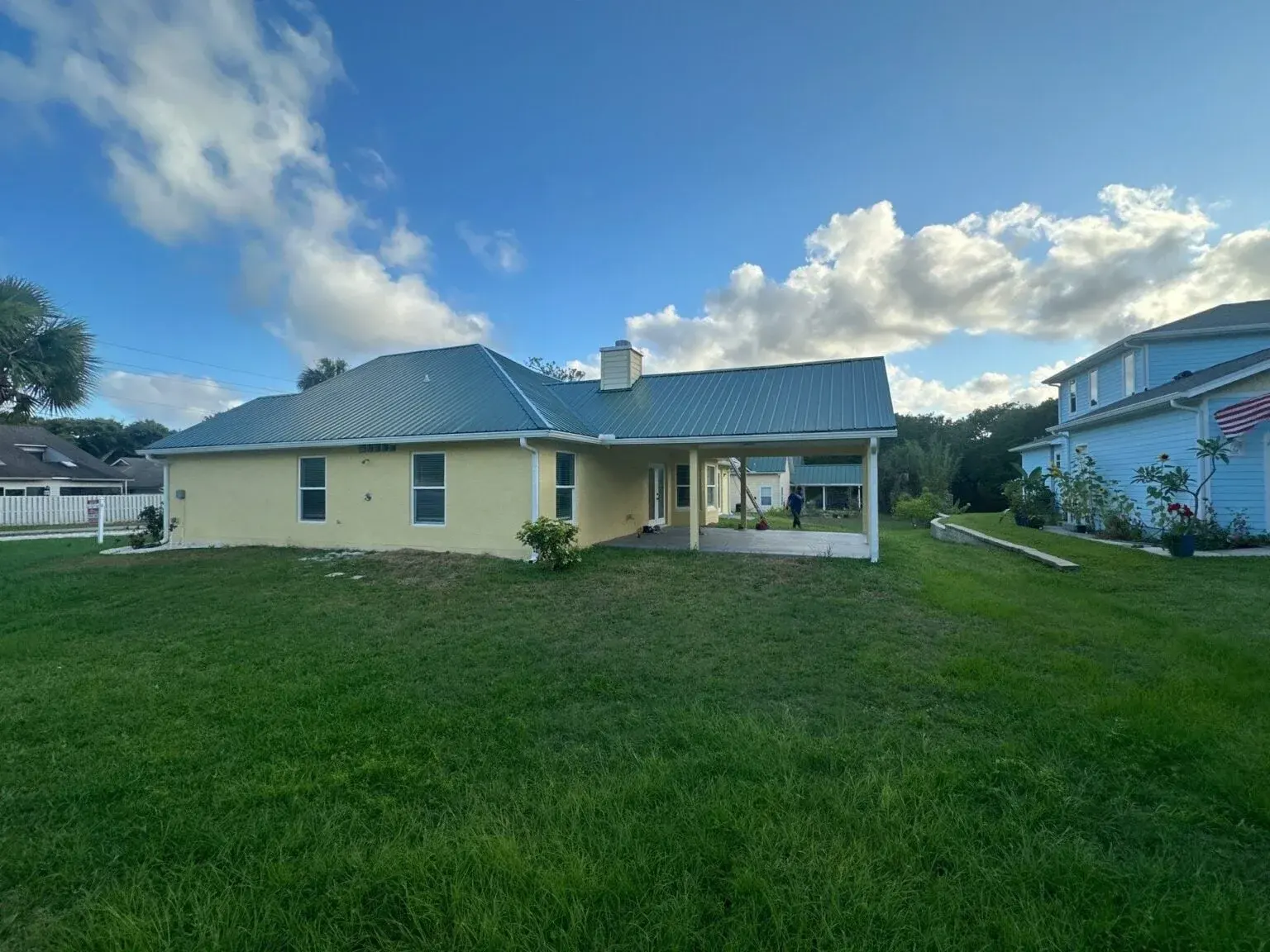
A metal roof is one of the smartest long term investments a Central Florida homeowner can make. Built right, it shrugs off hurricane-force winds, reflects the brutal summer sun off your attic, and can outlive the mortgage you took out to buy the house. Whether you’re in a DeBary subdivision, a Palm Coast canal home, or out near the Brevard coast, the right metal system gives you decades of protection with very little fuss. We install metal roofs across all eight of our service counties, and we’ll help you figure out which type actually makes sense for your home.
Florida is, frankly, hard on roofs. Between hurricane season, year round UV exposure, 60 plus inches of annual rainfall, and salt air rolling inland from both coasts, materials that hold up in Ohio simply don’t last as long here. Metal roofing is one of the few systems engineered specifically for this kind of climate.
Hurricane rated wind performance. Most metal systems we install are tested to 140 to 160 mph wind uplift when properly fastened, which meets and exceeds the Florida Building Code requirements that apply across Volusia, Seminole, Lake, Brevard, Orange, Osceola, Flagler, and Marion counties. Standing seam systems in particular tend to perform exceptionally well in named storms because there are no exposed fasteners to back out under wind pressure.
Long lifespan. A quality metal roof in Central Florida typically lasts 40 to 70 years, depending on the material, coating, and how well it’s maintained. Compare that to architectural asphalt shingles, which generally need replacement at 15 to 20 years here because of UV breakdown, and the math starts to make sense quickly.
Energy efficiency. Metal reflects solar heat instead of soaking it up the way dark shingles do. Many homeowners see their summer cooling costs drop after a metal roof goes on, especially when paired with a reflective finish. In a region where the AC runs eight months a year, that adds up.
Salt resistant variants. If you live in a coastal pocket of Volusia, Brevard, or Flagler County, salt air is a real concern. We have metal options specifically designed for saltwater exposure that won’t corrode or stain over time.
Lower long term cost of ownership. A metal roof costs more upfront than asphalt. But once you factor in the longer lifespan, lower maintenance, and potential insurance savings, the cost per year of service is often comparable or better.
Most residential metal roofs in Florida fall into one of two categories: standing seam or exposed fastened. They serve different homes, different budgets, and different priorities.
Standing seam metal roofing is the premium choice. The panels lock together at raised vertical seams, and the fasteners are hidden underneath, so nothing penetrates the surface of the roof. That’s a big deal in Florida because hidden fasteners mean fewer potential leak points and far better wind performance.
If you’re planning to be in your home for the long haul, or you want a roof that won’t need attention for decades, standing seam is hard to beat.
Exposed fastened metal roofing is the more affordable cousin. The panels are screwed down through the face of the panel using gasketed fasteners. It’s a proven, reliable system that’s been around forever, and it installs faster than standing seam.
For a lot of properties, especially across Lake, Marion, and rural Osceola counties, exposed fastened is the practical sweet spot between cost and longevity.
If your home is anywhere near salt water, ask us about aluminum metal roofing. Aluminum doesn’t rust, period. For coastal homes in Flagler Beach, New Smyrna, the Cocoa Beach corridor, or anywhere along the Indian River, aluminum is often the smarter call than steel, even though it costs a bit more.
There’s no single “best” roof for every home. But here’s how the three most common Florida roofing materials stack up:
| Factor | Architectural Asphalt | Metal | Concrete/Clay Tile |
|---|---|---|---|
| Lifespan in Florida | 15 to 20 years | 40 to 70 years | 40 to 50+ years |
| Hurricane performance | Good with high-wind systems | Excellent | Excellent (heavy) |
| Upfront cost | $ | $$ | $$$ |
| Insurance discounts | Sometimes | Often | Often |
| Energy efficiency | Lower | High | Moderate |
| Weight on structure | Light | Light | Heavy (may need reinforcement) |
| Maintenance needs | Moderate | Low | Low to moderate |
Asphalt is still the most popular choice in Central Florida because it’s affordable and looks good. But for homeowners who plan to stay put, want a roof that handles hurricanes without drama, and don’t want to think about replacement again for 40-plus years, metal usually wins on total cost of ownership.
Most metal roof projects we quote in Central Florida fall between $15,000 and $40,000, with several factors driving where you land in that range:
We give every customer a written, itemized estimate so you can see exactly what you’re paying for. If a metal roof is outside your budget right now, we’ll be honest about that and walk you through alternatives.
A new metal roof in Florida often comes with two real financial benefits beyond the roof itself.
Insurance discounts. Many Florida homeowners insurance carriers offer premium discounts for impact-rated and hurricane-rated roof systems, including metal. Discounts vary carrier to carrier, so check with your agent, but it’s worth asking before you sign a contract.
Warranty coverage. As an Atlas Diamond Pro Plus contractor and a certified CertainTeed installer, we can offer enhanced manufacturer warranties on the systems we install, layered on top of our own workmanship guarantee. Metal manufacturers typically warrant the panel finish for 30 to 50 years and the substrate for the lifetime of the original homeowner. We’ll explain exactly what your warranty covers and walk you through registration after install.
We also handle all permitting and Florida Building Code compliance for you. License CCC1332542 — every roof we put on is permitted, inspected, and tied to our name.
Modern metal roofs are coated with multi-layer paint systems and either galvanized or made from aluminum. Steel panels can rust at unprotected cut edges over very long timeframes, but properly installed and maintained, rust isn’t a real concern in most inland Florida settings. For coastal homes within a mile or two of salt water, we recommend aluminum, which doesn’t rust at all.
This is the most common question we get, and the answer surprises people. A metal roof installed over solid decking with proper underlayment is no louder inside the house than asphalt shingles. The “rain on a tin roof” sound comes from old barn roofs with no decking underneath. In a typical Florida home, you’ll barely notice the difference.
Generally yes, especially in Florida where buyers know what hurricane season costs. A newer metal roof is a strong selling point, particularly for buyers who’ve been through insurance non-renewals. It also signals lower maintenance costs going forward, which appraisers and buyers both factor in.
Sometimes, but we recommend a tear off. Florida Building Code limits the number of roof layers, and overlaying can hide deck damage, trapped moisture, or rot underneath. A full tear-off lets us inspect and repair the decking, install fresh underlayment, and start the warranty clock cleanly.
Most residential metal roofs are completed in 3 to 7 days, depending on size, complexity, and weather. Standing seam typically takes longer than exposed fastened. We’ll give you a realistic timeline up front and keep you posted daily once we start.
No. Switching from asphalt or tile to metal is a standard upgrade, and most carriers welcome it. In fact, you may qualify for a wind mitigation discount once the new roof is installed. We provide all the documentation you need for your insurer.
Metal roofs do not attract lightning. Lightning is drawn to the highest object in an area regardless of material. If lightning does strike a metal roof, the metal actually disperses the energy more safely than combustible materials would, which is why metal is considered one of the safer roofing options in lightning-prone regions like Central Florida.
Yes, and it’s often the right choice. For homes within salt-air zones along the Volusia, Brevard, or Flagler coast, we recommend aluminum panels with marine-grade finishes. They handle salt exposure indefinitely without corrosion. We have specific products designed for these environments.
If you’re weighing a metal roof for your Central Florida home, the best next step is a free, no-pressure inspection. We’ll measure your roof, look at your existing system, talk through your goals and budget, and give you a written estimate you can take your time with.
Call us at 386-631-5566 or request a free estimate online. We serve Volusia, Seminole, Lake, Brevard, Orange, Osceola, Flagler, and Marion counties from our DeBary headquarters.
Pinnacle Roofing Group — License CCC1332542 — Atlas Diamond Pro Plus and CertainTeed certified — 4.9 stars across 461+ Google reviews.