

protect yourself

Protect Yourself Before Signing a Roofing Contract

Hiring a roofing contractor is a major financial decision. In Florida, where storm chasers and unlicensed operators flood the market after every hurricane, asking the right questions separates legitimate professionals from potential disasters. Before you sign anything for a roof replacement or major repair, ask these nine questions.

1. Are You Licensed by the State of Florida?

Florida requires roofing contractors to hold either a state certified or registered contractor license. Ask for the license number and verify it through the Florida Department of Business and Professional Regulation (DBPR) website. A licensed contractor has passed competency exams and meets minimum financial and insurance requirements. Make sure the License holder is actually apart of the company and not just renting their license out. 

2. Do You Carry Workers’ Compensation and Liability Insurance?

Ask for current certificates of insurance and verify them directly with the insurance carrier. Workers’ compensation protects you from liability if a worker is injured on your property. General liability covers damage to your property during the project. Never accept a verbal assurance, get documentation.

3. Will You Pull the Required Permits?

Legitimate Florida roofing contractors pull building permits for every project that requires them. Permits ensure your roof is inspected for code compliance by the local building department. If a contractor suggests skipping permits to save money, walk away. Unpermitted work can void your insurance and create legal issues when selling your home.

4. What Specific Materials Will You Use?

Get specifics—brand name, product line, and quality level for every component including shingles or metal panels, underlayment, flashing, ridge caps, and fasteners. A vague answer like “we use good materials” is a red flag. Quality contractors specify exact roofing materials in their written proposals.

5. What Is Your Warranty Coverage?

Understand both the manufacturer’s material warranty and the contractor’s workmanship warranty. Material warranties typically range from 25 years to lifetime. Workmanship warranties covering installation errors vary widely. A reputable contractor stands behind their work with a meaningful workmanship warranty, not just a 1 year token guarantee.

6. How Will You Handle the Tear-Off?

Ask whether the contractor will do a complete tear-off down to the deck, and how they’ll handle deck repairs if damage is discovered. A thorough contractor includes deck inspection in their process and has a transparent pricing method for any necessary deck replacements. This should be spelled out in the contract.

7. Can You Provide Local References?

Ask for references from recent projects in your area. Better yet, ask to see completed projects in your neighborhood. Online reviews on Google and the BBB provide additional perspective, but firsthand references from homeowners in Orlando, Daytona Beach, or wherever you live carry extra credibility.

8. What Is Your Payment Schedule?

Be cautious of contractors demanding full payment upfront. A standard payment structure is a deposit (typically 10 to 30%) with the balance due upon completion and your satisfaction. Never pay the full amount before the work is done. A reasonable deposit covers material ordering costs; the rest should be tied to completed work.

9. How Do You Handle Insurance Claims?

If your project involves insurance, ask how the contractor works with adjusters. Experienced contractors understand the claims process and can help document damage, provide code-compliant estimates that match insurance scoping, and coordinate timing with your carrier. Pinnacle Roofing Group assists homeowners across Central Florida with insurance claims on every covered project.

Ask Pinnacle These Questions We Welcome Them

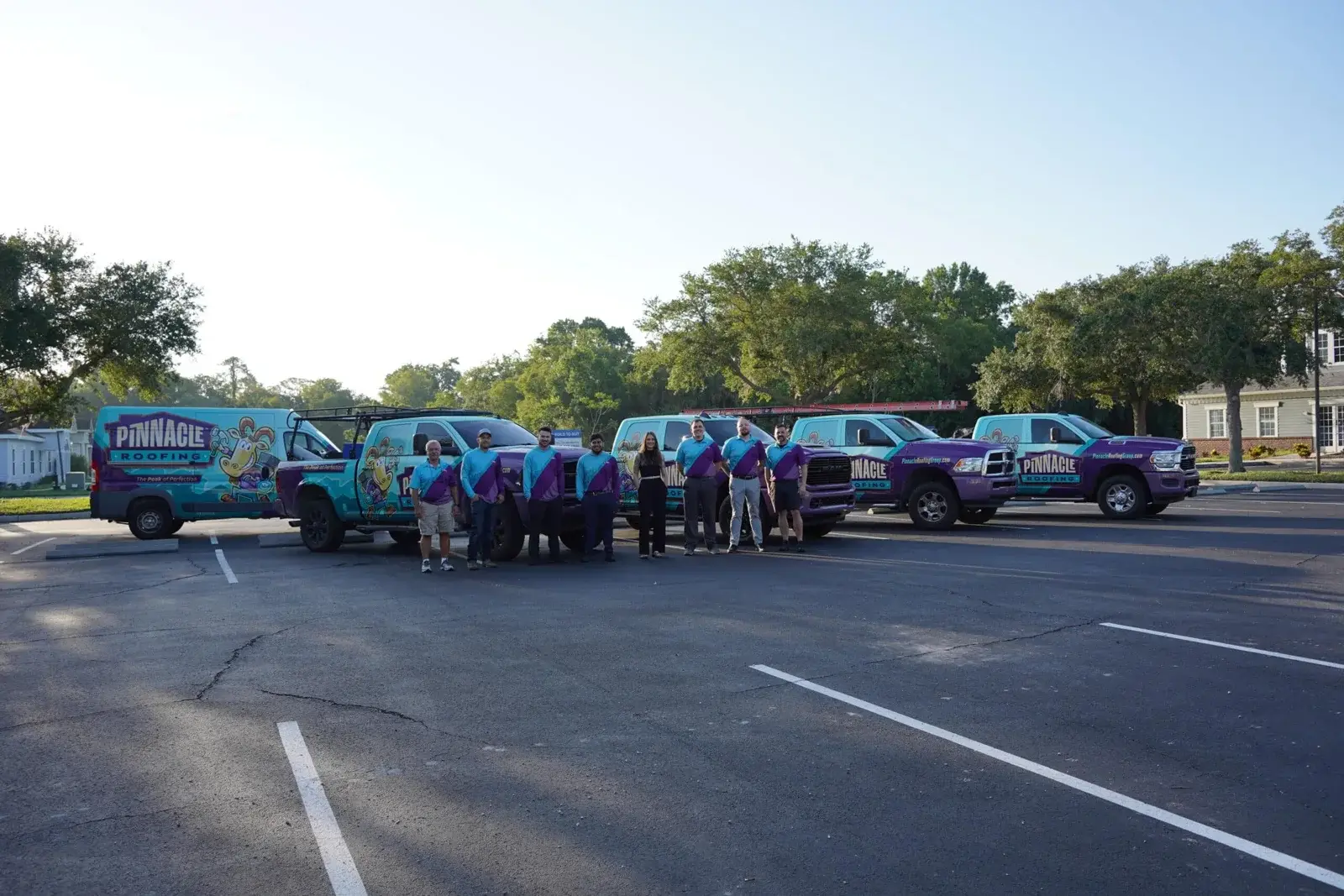
Pinnacle Roofing Group is fully licensed, insured, and transparent about every aspect of our process. We encourage homeowners to ask tough questions: it’s how you identify the contractor who deserves your trust. Serving all of Central Florida including Orange, Volusia, Seminole, Brevard, Flagler, and Lake counties. Get your free estimate from a contractor you can verify.

Frequently Asked Questions

What license should a Florida roofing contractor have?

Florida roofing contractors must hold either a Certified Roofing Contractor (CCC) license or a Registered Roofing Contractor license issued by the state. You can verify any contractor’s license status for free on the Florida Department of Business and Professional Regulation (DBPR) website at myfloridalicense.com. A valid license confirms the contractor has passed competency exams and meets state-mandated insurance and financial requirements. Make sure the license holder is actively employed by the company—not just renting their license to an unlicensed operator.

Visit the Florida DBPR website at myfloridalicense.com, enter the contractor’s name or license number, and check that the license is active and in good standing. The results will show the license type (CCC or registered), any disciplinary history, and the business entity tied to the license. You can also call the DBPR directly at (850) 487-1395 to verify license status by phone.

Start by verifying their license on the Florida DBPR website. Then check Google reviews, Better Business Bureau (BBB) ratings, and ask for recent local references you can contact directly. Look for manufacturer certifications such as GAF Master Elite or Owens Corning Preferred Contractor, which indicate the company meets higher standards for installation quality and business practices. A strong track record with homeowners in your specific county or city is the best indicator of reliability.

Storm chasers are out-of-state or unlicensed roofing operators who flood Florida markets after hurricanes, offering low prices and fast timelines. They often perform substandard work, skip permits, and disappear before warranty claims arise. Avoid them by verifying a valid Florida roofing license, confirming a local business address, checking for workers’ compensation insurance, and reading reviews from homeowners in your area. A contractor who has been operating locally for several years is far less likely to be a storm chaser.

A roofing contractor should carry both general liability insurance and workers’ compensation insurance. General liability protects your property from damage caused during the project. Workers’ compensation covers medical costs if a worker is injured on your property, preventing you from being held financially liable. Always request current certificates of insurance and verify coverage directly with the insurance carrier—never rely on verbal assurances alone.

Building permits ensure your new roof is inspected by the local building department for compliance with the Florida Building Code. Unpermitted roofing work can void your homeowner’s insurance, reduce your home’s resale value, and create legal complications when selling. In Florida, most roof replacements and major repairs require a permit. A legitimate contractor handles the permitting process as part of the project.

The best roofing materials for Florida depend on your budget, aesthetic preference, and wind zone. Architectural asphalt shingles (such as GAF Timberline HDZ or Owens Corning Duration) offer strong wind resistance up to 130 mph at a moderate price point. Standing seam metal roofing provides superior wind and impact resistance with a lifespan of 40 to 70 years. Concrete tile is durable and common in Central and South Florida. Your contractor should recommend materials rated for your specific Florida wind zone.