




Apollo-era houses, a 1963 charter and a 1972 flood cutoff: re-roofing in Cape Canaveral
Many of Cape Canaveral's houses went up during the Apollo days of the 1960s and 1970s, not long after the city incorporated on May 16, 1963. Those two decades fall on either side of 1972, the year flood zones took effect. A 2024 city study counted 35 buildings constructed before that cutoff and judged them unlikely to meet current floodplain standards, so a free assessment here starts by pinning down the year the house was built.
Polk Avenue is where the paperwork lands. Cape Canaveral runs its own Building Department at 100 Polk Ave., and archived city permit records list permits described as re-roofs. On its own jobs, Pinnacle puts the application together, turns it in to that department and lines up each inspection, so the homeowner does not have to file anything.
That same office staffs a certified floodplain manager. Cape Canaveral's newest FEMA flood map is the first one for the city to include a 500-year flood area, and that area covers most of the city. New shingles or metal panels do not change where a house falls on the map, yet an owner can ask the floodplain manager about the property's specific flood zone while the reroof permit is open.
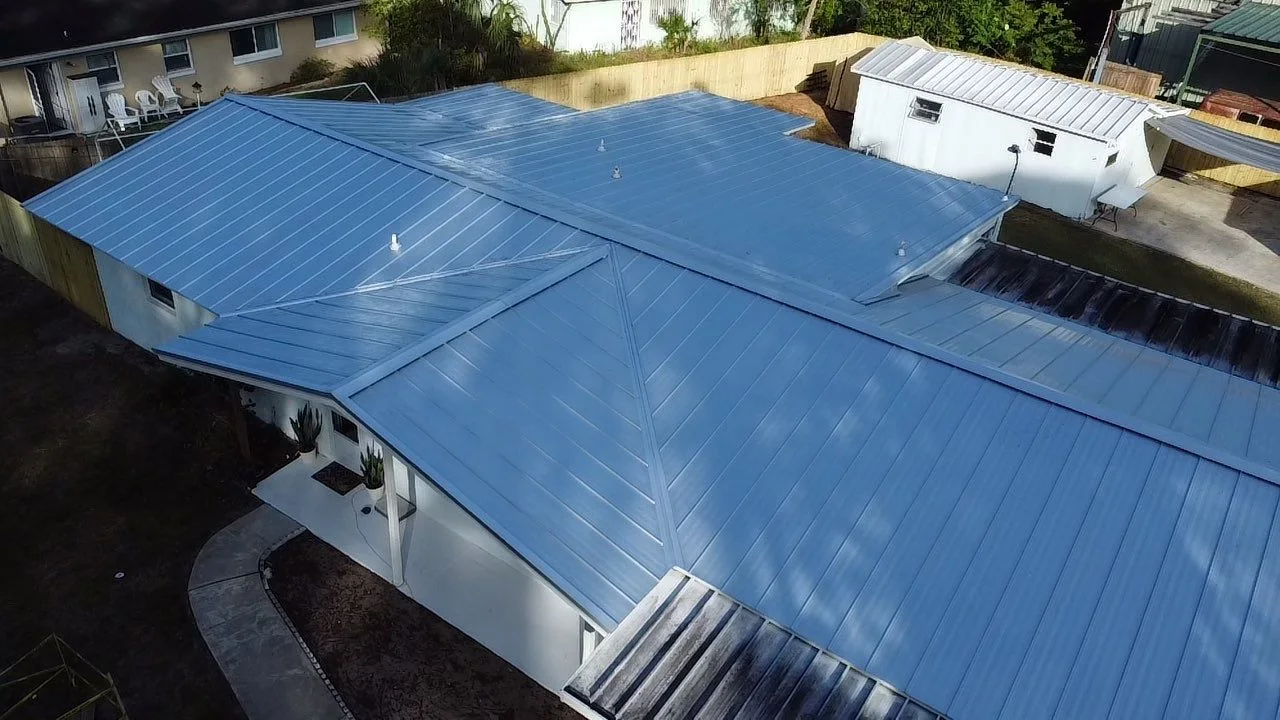
Weather reaches this strip of land from two sides, with the Banana River Lagoon to the west and the Atlantic to the east. The city's risk assessment lists urban flooding, storm surge and ongoing sea level rise as the hazards of a barrier island, and the city holds StormReady certification. Against that backdrop, the material talk at an assessment weighs TAMKO architectural shingles, standing seam metal and stone-coated steel on how each one is attached at the eaves, rakes and ridge.
The selected archive used here does not include a Cape Canaveral project; that is a limitation of this evidence set, not a complete company job history. What an owner here gets instead is a family-owned DeBary company with a 4.9 Google rating across 524 reviews, and a first visit that ends with photographs of the existing roof and a written scope. That visit arrives on Highway A1A, the city's main link to its neighbors.
Check the current permit guidance. Confirm the property jurisdiction and requirements for the actual scope before work begins.
More regional roofing guides
These service guides provide additional planning information. Your roof's size, condition, material and written scope determine its price, not the price of a neighboring city's project.