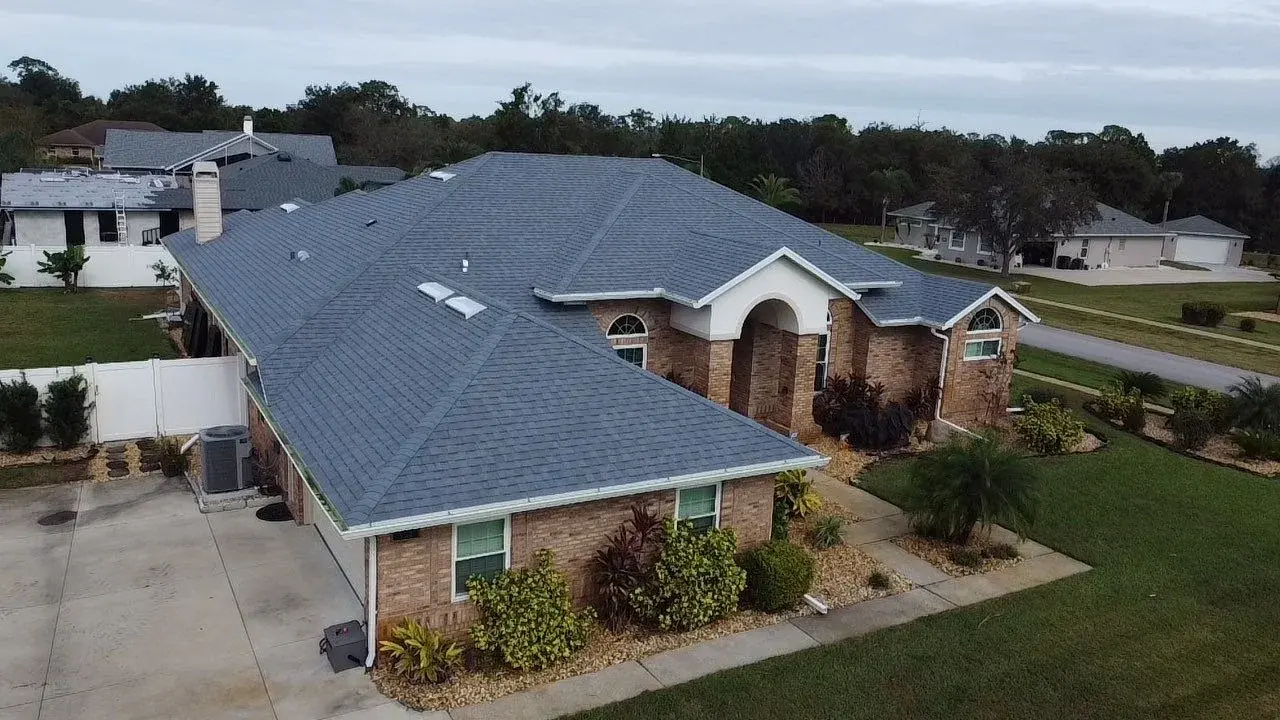


Gray shingle roof on a brick home photographed from above
★ 4.9 Google · 524 reviews · Central Florida

Flat and low-slope roofing

A low-slope roof needs a system suited to its shape and water-management demands. Whether it covers an addition, a porch, or a commercial building, start with the roof’s condition and how water leaves it.

FL License CCC1332542BBB Accredited, A+TAMKO Diamond contractorIn-house crew, family-owned
4.9 star Google customer rating4.9 on Google524 homeowner reviewsBBB Accredited Business, A+ ratingBBB AccreditedA+ rating · accredited since 2021FL licensed contractorCCC1332542 · verify anytimeTAMKO Diamond contractorTAMKO DiamondContractorRoofing Strong Alliance by TAMKORoofing Strong AllianceTAMKO contractor programLocally owned and operated, DeBary, Florida, since 2020Locally ownedDeBary, Florida · since 2020In-house crewOur own W-2 installersFree roof assessmentsWritten options, no pressure

“Flat roof” describes a shape, not a material

Several roof systems can be used in low-slope applications, with different materials, seams, and attachment requirements. Ask which system is being proposed for your roof and what makes it suitable.

If the low-slope section connects to a steeper roof, a wall, or a covered outdoor space, include that transition in the assessment. A proposal should explain the full area being addressed, including adjoining details.

Drainage deserves a clear explanation

Low-slope roofs shed water more slowly than steep roofs. Building-science guidance identifies slope, drains, scuppers, and other drainage elements as parts of the water-management approach.

Tell the assessor where you have observed standing water, overflow, or recurring stains. Ask what the proposed work does about drainage and whether further evaluation is needed. Covering the surface does not explain the route water should take.

  • Existing roof material and underlying condition
  • Seams, edges, and wall transitions
  • Drains, scuppers, or gutter connections
  • Pipes, equipment, and other penetrations
  • Areas requiring further investigation
  • Proposed material and installation documents

Choose the scope from the findings

A localized repair, a suitable restoration system, and replacement serve different purposes. Ask which condition each option addresses and what would remain outside the scope.

If a coating is suggested, ask how suitability will be established, including existing moisture concerns and adhesion. If replacement is proposed, ask what will be removed and how underlying components will be evaluated.

Keep use and access in the plan

Describe how the area below is used and which access routes need to stay available. Let the team know about rooftop equipment, recent work by other trades, and any known problem areas.

After the work, keep the installed-system information and care requirements together. Future roof access, equipment changes, and maintenance should be coordinated with the applicable instructions. An organized record helps the next assessment begin with facts rather than a fresh set of assumptions.

Your questions, answered

Can regular roof shingles be used on any roof slope?

No. Roof coverings have application requirements, including slope limits. The proposed product must be suitable for the roof’s actual conditions.

Does ponding water mean replacement is required?

It calls for assessment of drainage and the roof’s condition. The appropriate scope depends on those findings.

Can a flat roof be coated?

Some existing systems may qualify after the necessary assessment, testing, and preparation. Suitability must be established for the particular roof and coating.

The details behind the decision

Start with seams, drainage and details.

Low-slope roofing uses assemblies designed for a different water-shedding environment than steep-slope shingles. Compare the membrane, attachment, insulation and drainage arrangement together. The product name alone does not describe the complete roof or resolve existing drainage and moisture concerns.

Pinnacle Roofing Group · Select to enlarge

Read the supporting guidance: NRCA: low-slope membrane systems · CertainTeed: commercial roof systems

01TPO in plain language

Thermoplastic polyolefin, or TPO, is a single-ply membrane with heat-welded seams. A proposal should identify the membrane specification, attachment method and details around rooftop equipment. Ask how the complete assembly fits the existing deck and roof conditions.

02Modified bitumen in plain language

Modified-bitumen systems use asphalt-based membranes modified with polymers. Assemblies and application methods vary, including self-adhered products. Ask for the actual system and layers specified for your building, rather than comparing only the visible cap sheet.

03Water needs a route off the roof

Discuss where water collects, how outlets are maintained and whether the proposal changes drainage. Identify which items are being repaired and which existing conditions remain. Include service paths for equipment so future visits do not become an afterthought.

Keep your next step simple

Your low slope conversation checklist

0 of 5 ready

Check what you have prepared. Download the list to bring to your roofing conversation.

4.9
524 Google reviews
Google rating

Homeowners across Central Florida rate Pinnacle 4.9 out of 5.

Read them before you call. Ask us anything you read there, and we will answer it straight.

Justin Coltharp, founder and owner of Pinnacle Roofing Group
Choosing a roofer is a big decision. My goal is to make it easier to understand what is happening on your roof, what your options are, and why we are recommending a particular approach.
Justin Coltharp Founder and owner, Pinnacle Roofing Group · DeBary, FL Meet Justin →
Roof questions in Central Florida?(386) 631-5566Free assessment

Let’s figure out what
your roof needs.

Tell us what’s happening. Start with a roof assessment.

Request my roof assessment
Call PinnacleRequest an assessment ↗