

Tile and shingle are different roof systems. Choose the one your house, any association rules, and a written scope can support. Each has its own underlayment, flashing details, and weight, so price them as two separate roofs.
Compare two proposals for your house, with the product, the underlayment, the flashing, and the wood called out.
Start with the roof you already have
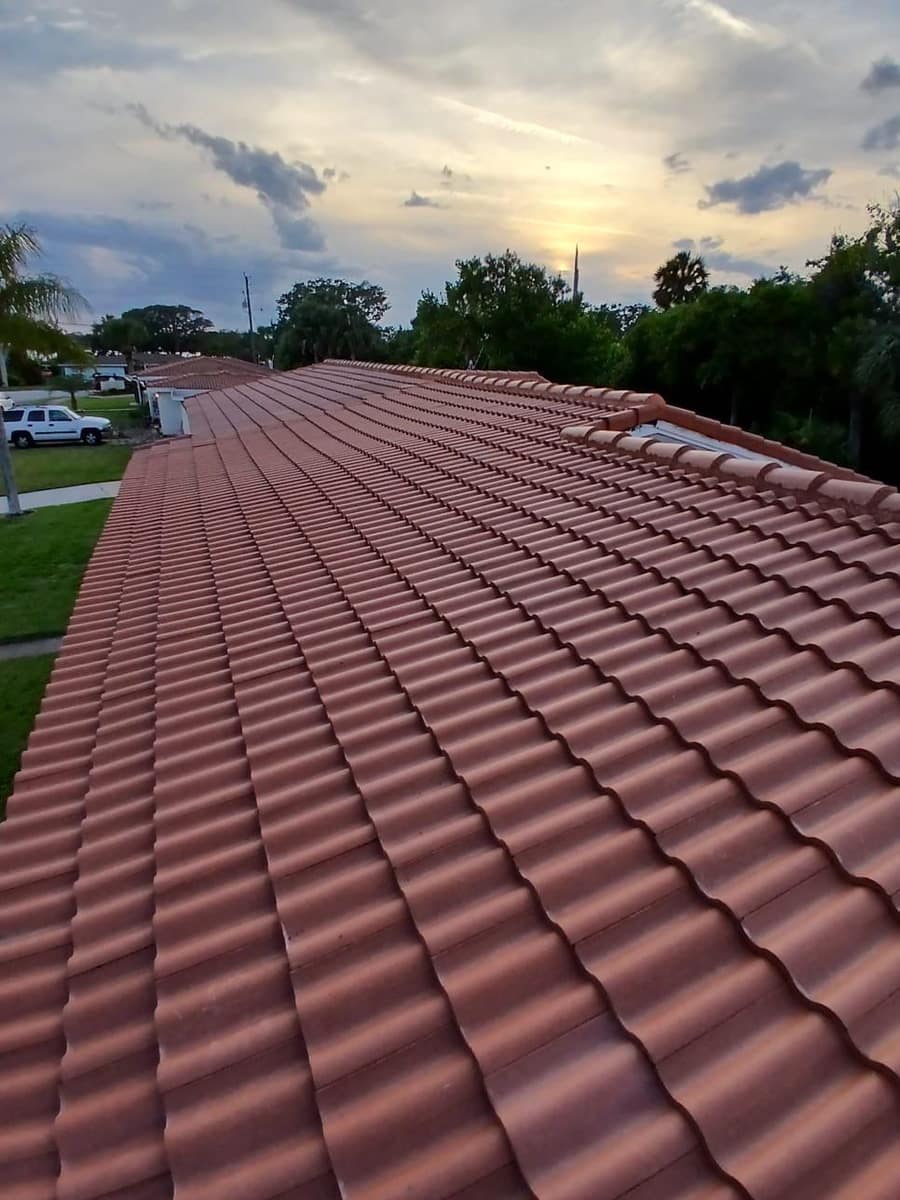
If the house has tile, the first question is the condition of the tile and of the layers under it. Tiles can look orderly while the underlayment is the part that has worn out. Tile work often starts with those underlayers. Switching materials is a separate project.
If the house has shingles, the first question is the condition of those shingles, the deck, and the details. A shingle replacement should name the shingle. On a Pinnacle proposal that means a TAMKO product by name, such as Heritage or Titan XT. The word "architectural" by itself leaves the product unnamed.
Switching from one to the other is a different project from replacing like for like. Treat it as its own scope.
Weight, structure, and the rules on the house
Tile weighs more than an asphalt shingle roof. Before anyone proposes a change to tile, the framing has to be part of the conversation. Do not assume the existing rafters were planned for it because a neighbor has tile.
Association rules may require tile, forbid it, or limit the color and profile. A shingle the manufacturer calls "slate" is still a shingle. If the guidelines say tile, confirm that a shingle profile is accepted before you fall in love with a sample.
The permit set has to match the system you chose. A last-minute material change is a change to the approval, the order, and the price.
Compare the layers under the surface
On tile, ask which underlayment is proposed, how broken tiles will be handled, and how hips, ridges, and valleys are detailed. The tiles you see are only part of the water-shedding system.
On shingles, ask for the shingle name, the underlayment, the starter and hip products, and the flashing at walls and vents. Two "architectural shingle" prices can hide different products.
Put the two scopes side by side if you are choosing. The materials pages are a way to see the families of products. Your own proposal still has to name the products for your roof.
Think past installation day
A cracked tile is sometimes a limited repair, and sometimes a sign to look underneath. Ask, for your roof, what a future tile repair involves and whether matching tiles are still made.
A damaged shingle is a different repair. Matching a newer shingle to an older slope is its own problem, and the proposal should say so if only part of the roof is being done.
Ask who you call in five years and what records you will have.
Questions homeowners ask
Can I put shingles on a house that has tile now?
Sometimes, and only as a designed scope. The association, the deck, the flashing, and the look of the house all change with the material. Get that in writing before you treat it as a simple swap.
Is tile always the longer-lasting choice?
No. A tile roof still depends on the underlayment, the flashing, and the condition of the tiles. A shingle roof depends on the product and the installation. Age charts do not replace a look at the house.
Which TAMKO shingle is the tile alternative?
None of them is tile. Heritage and Titan XT are shingle products. If you want tile, compare a tile scope with a shingle scope. Do not rename a shingle and call it tile.
Compare two scopes for the same house
If you are choosing between tile and shingle, start with an assessment of the roof you have. Bring the association rules and any product you have already been shown.
Related reading: Compare materials · Roofing packages · Warranty checklist