
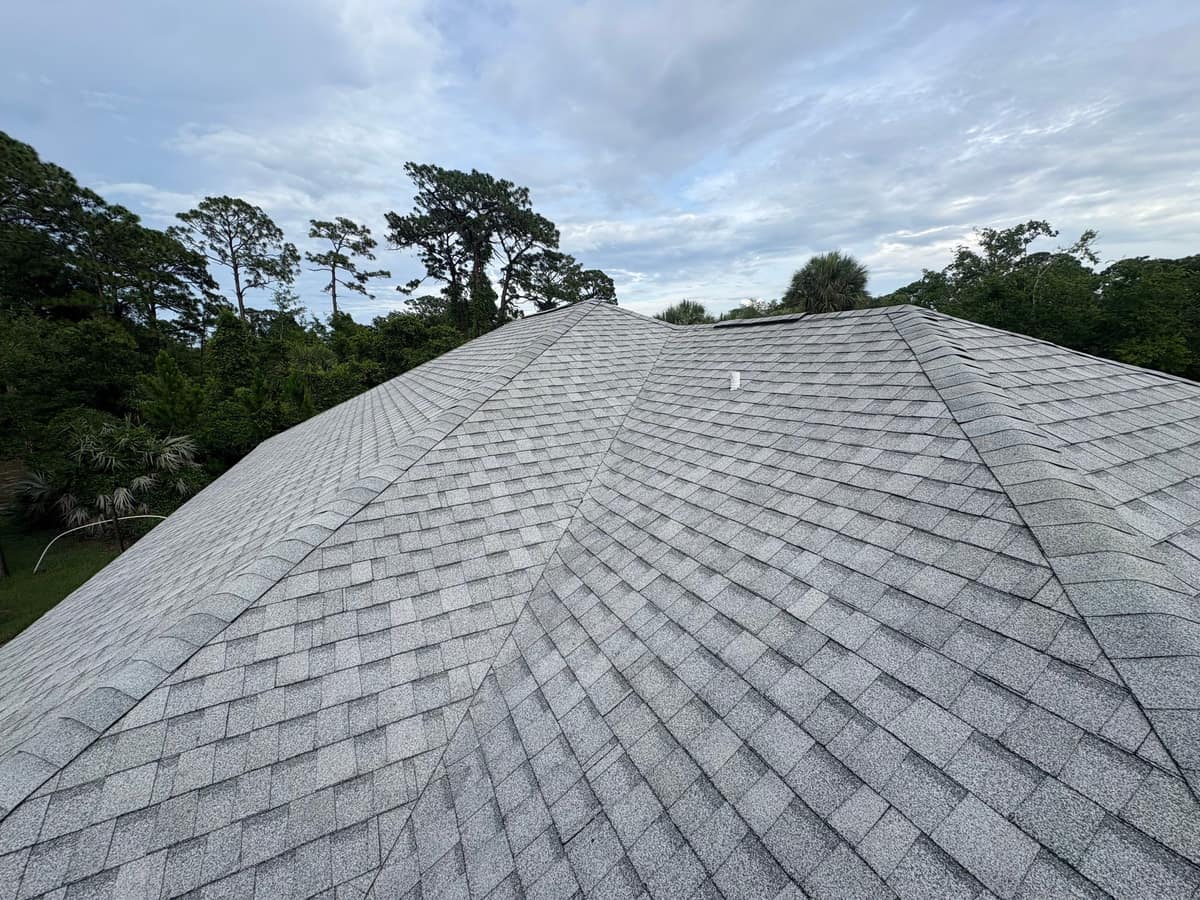





Black streaks on Central Florida shingles are usually algae. The streaks alone do not mean the roof is leaking. Warm, humid weather gives the growth what it needs, and light-colored shingles show it first.
The Asphalt Roofing Manufacturers Association describes this discoloration as algae, often including Gloeocapsa magma, and says it can be mistaken for dirt, fungus, or tree droppings. ARMA explains algae discoloration on roofs. Whether the shingles are worn is a separate check.
What you are looking at
The dark color is a pigment the algae produces. It often starts as spots and becomes streaks that follow the path water takes down the slope. A north side, or a slope that stays shaded, usually shows it before a slope that dries in full sun.
Moss and tree litter look different. Moss is thicker and more local. Leaves and seed pods sit on top of the shingles and can be moved. Algae stains the surface itself. If you are not sure which one you have, a photo taken from the ground is enough to start the conversation. You do not need to climb up and touch it.
Why it shows up on so many local roofs
Central Florida gives roofs long stretches of heat, humidity, and afternoon rain. Dew and shade keep the surface damp. Spores move through the air, which is why several houses on the same street can streak in the same season.
Trees make it more likely because they shade the roof and drop debris that holds moisture. A clean, sunny roof can still streak, but shade helps explain why one slope has it and another does not.
A darker shingle can hide the same growth that looks dramatic on a light gray or white roof. Judging two houses by the streaks alone will mislead you.
What not to do to the shingles
Do not pressure-wash asphalt shingles. ARMA warns that high pressure and scrubbing can strip granules. Those granules are part of the shingle, so washing them off for a better color costs you some of the shingle.
Do not mix a cleaner from a general internet recipe and spray the roof yourself. Product instructions differ, the wet surface is slippery, and whatever runs off lands in the landscaping and the gutters. If someone proposes a wash, ask which shingle is on the house and what that manufacturer allows.
A wash that is allowed can still be temporary. The growth can return. Cleaning is maintenance. It does not repair a leak or replace a worn roof.
Decide from the shingles themselves
Ask for a look at granule loss, cracked or missing shingles, soft decking, and any stains inside the house. Black streaks can sit on a roof that is still serviceable. They can also sit on a roof that is worn out for other reasons.
If replacement is already the recommendation, ask what the proposed shingle's own information says about algae discoloration. Pinnacle proposals name the TAMKO product. Read that product's information rather than assuming every shingle treats staining the same way.
Keep the photos. A picture from the yard, dated, is more useful later than a memory that "it looked worse last summer."
Questions homeowners ask
Do black streaks mean the roof is leaking?
No. The streaks are algae discoloration on the surface. A leak is water getting through the roof. You can have one without the other.
Will scrubbing the streaks off fix it?
Scrubbing and pressure washing can knock granules off asphalt shingles. Ask the shingle manufacturer what cleaning is allowed. Even an allowed wash can fade and then return.
Should I replace a roof because of streaks?
Not from the streaks alone. Ask what else is wrong, if anything. Replace when the roof's condition supports that scope.
Send photos of the streaks with the address
If you want someone to tell the streaks apart from wear, ask Pinnacle to look at the roof. A ground photo of each slope, plus any ceiling stain, is a useful start.
Related reading: Roof repair · Roof replacement · Skylights